채팅 이후의 AI Workspace: Artifacts, 멀티 윈도우 컨텍스트, Virtual Partners
AI Workspaces가 채팅을 넘어 지속 가능한 Artifacts, runtime 규율, 병렬 작업 표면, 개발자와 아키텍트 워크플로를 위한 Virtual Partners로 이동하는 이유를 설명하는 기술 보고서.
AI chat은 첨단 모델을 쉽게 쓰게 만들었다. 그러나 AI 작업을 신뢰 가능하게 만든 것은 아니다.
개발자와 아키텍트에게 한계는 빠르게 드러난다. 채팅 스레드는 설계를 설명하고, 마이그레이션 계획을 작성하고, 로그를 요약할 수 있다. 하지만 실제 작업은 transcript 안에 머물지 않는다. 그것은 다이어그램, 명세, 패치, 조사 노트, 테스트 결과, pull-request 댓글, 사고 타임라인, 의사결정 기록, 후속 작업으로 바뀐다. 작업은 분기된다. 한 창은 프로덕션 동작을 조사하고, 다른 창은 벤더 제약을 비교하고, 또 다른 창은 설계 메모를 작성하며, 또 다른 창은 구현 단계를 준비한다.
따라서 다음 AI workspace는 더 큰 채팅 상자가 아니라 work objects, execution state, parallel surfaces, delegated continuity를 관리하는 시스템이다.
이 글은 네 가지 설계 질문으로 변화를 설명한다.
- 작업 객체는 무엇인가. 시스템은 답변을 만드는가, 아니면 검사, 수정, 배포가 가능한 지속적 artifact를 만드는가.
- runtime truth는 어디에 있는가. workspace는 말한 것, 실행한 것, 변경된 것을 분리하는가.
- 얼마나 많은 surface를 병렬로 실행할 수 있는가. 여러 windows, sessions, panes, contexts를 하나의 thread로 합치지 않고 유지할 수 있는가.
- 누가 continuity를 유지하는가. workspace 수준의 virtual partner가 작업을 분해, 위임, 추적, 종합할 수 있는가.
Chat은 진입점이고 workspace는 control plane이다.
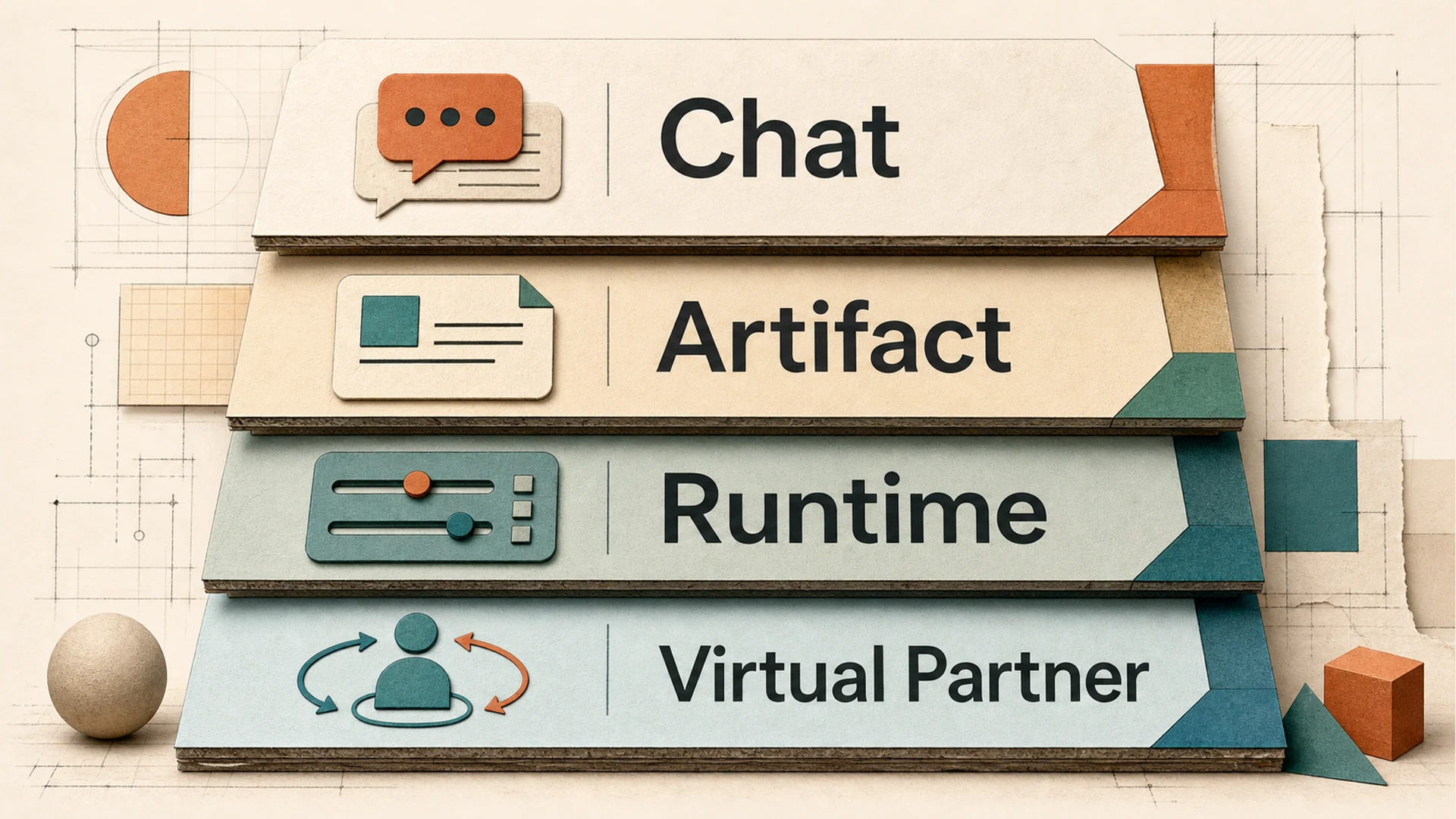 Four layers of AI work: Chat, Artifact, Runtime, and Virtual Partner
1. 왜 채팅 상자만으로는 부족한가
채팅 상자는 대화에는 좋지만 작업 경계를 보존하는 데 약하다. 하나의 transcript는 사용자 의도, 모델 추론, tool results, deliverable이 될지 모르는 drafts, 지속되어야 할 decisions, 일시적 failures, audit 또는 replay가 필요한 action history를 섞는다.
짧은 Q&A에서는 괜찮지만, AI가 multi-step workflow를 실행하고 files와 협업하며 tools를 쓰고 sessions 사이에서 작업을 넘기면 취약해진다. 소프트웨어 시스템에서 logs, source files, builds, tests, deployment state, issue comments는 관련되어도 하나의 문자열로 저장하지 않는다. AI workspaces도 마찬가지다. Conversation, output, runtime state, long-term decision memory는 구분되어야 한다.
2. Post-chat AI workspaces를 위한 네 가지 설계 질문
Question 1: 무엇이 work object인가
Response는 일시적이고 artifact는 지속적이다. Chat-first system에서는 가치 단위가 answer이지만, workspace-first system에서는 document, code patch, research table, diagram, test plan, decision log, spreadsheet, presentation, task board 같은 work object가 단위가 된다. 이 객체는 상태를 가져야 하고, 생성된 턴 이후에도 살아남아야 하며, 전체 대화를 재생하지 않아도 검토할 수 있어야 한다.
Claude는 Artifacts를 보통 15 lines를 넘는 독립적이고 실질적인 콘텐츠로 설명하며, 문서에는 artifact당 20 MB의 persistent storage가 나온다. ChatGPT Canvas도 긴 생성 콘텐츠를 다르게 다루며, OpenAI는 생성 콘텐츠가 10 lines를 넘으면 Canvas가 자동으로 열릴 수 있다고 말한다. 중요한 AI 출력에는 자체 surface가 필요하다는 신호다.
Question 2: runtime truth는 어디에 있는가
Transcript는 대화 기록이지만 실행의 진실로 항상 최선은 아니다. Agent가 files를 편집하고, 외부 tools를 호출하고, browser를 열고, documents를 읽고, tests를 실행한다면 workspace는 모델이 말한 것뿐 아니라 무엇을 시도했고, 무엇이 완료되었고, 무엇이 실패했고, 무엇이 바뀌었고, 어떤 evidence가 결과를 지지하는지 알아야 한다.
이 분리는 reliability, recovery, governance를 높인다. 사용자는 시스템이 실제로 check를 실행했는지 확인할 수 있다. 장시간 작업이 중간에 실패해도 execution state가 있으면 더 안전하게 재개하거나 우회할 수 있다. 팀에서는 instruction, action, result, decision을 구분한 audit trail이 중요하다.
transcript는 작업을 설명해야 하지만, 작업이 존재하는 유일한 장소가 되어서는 안 된다.
Question 3: 사용자는 얼마나 많은 병렬 surface를 가질 수 있는가
AI work는 multi-window가 되고 있다.
- Workspace: materials, sessions, preferences를 둘러싼 지속적 경계.
- Session: task-focused conversation 또는 workstream.
- Tab: 병렬 attention의 가시 단위.
- Pane: artifact, browser, terminal, document, comparison view를 위한 local surface.
- Window: 다른 phases 또는 projects를 담는 OS 수준 container.
이 계층은 장식이 아니라 실제 작업 방식이다. 개발자는 architecture trade-offs, implementation, testing, release notes를 각각 다른 sessions에 둘 수 있다. 좋은 multi-window AI workspace는 더 넓은 화면이 아니라 context partitioning system이다.
Question 4: 누가 continuity를 유지하는가
Artifacts와 windows 다음 단계는 workspace-level partner다. 이것은 avatar가 아니라 orchestrator에 가깝다. Workspace goal을 이해하고, work를 분해하고, subtasks를 위임하고, progress를 추적하고, missing evidence를 감지하고, decisions를 요약한다. 사용자는 판단을 소유하고 partner는 operational memory를 유지한다.
Virtual partner는 어떤 sessions가 active, blocked, complete인지, 어떤 artifact가 current candidate deliverable인지, 어떤 assumptions가 검증되지 않았는지, 어떤 branch를 final output에 병합해야 하는지, 어떤 context를 격리해야 하는지 답하는 coordination layer다.
3. Artifact discipline: replies에서 deliverables로
Artifacts는 UI 기능처럼 소개되지만 핵심은 discipline이다. Claude Artifacts와 ChatGPT Canvas는 생성 작업에 별도의 editable surface가 필요함을 보여준다. Claude Projects는 200K context window, 약 500-page book에 해당하는 project context model을 제공한다. ChatGPT Projects는 chats, files, instructions 주위에 workspace-like boundaries를 둔다.
MCPlato의 원칙은 output을 stateful하고 reviewable하게 만드는 것이다. 실용적인 artifact discipline은 다음을 포함한다.
- stateful deliverables, 대화 조각만이 아니다.
- phase awareness, draft, candidate, final output을 구분한다.
- context and tool isolation, 관련 없는 assumptions나 permissions를 상속하지 않는다.
- completion checks, done은 evidence가 수집되고 constraints가 충족되었음을 뜻한다.
- decision trace, artifact가 왜 그 모습인지 이해하게 한다.
전문 사용자는 영원히 독립적으로 행동하는 AI보다, 신뢰하고 검사하고 수정할 수 있는 objects를 남기는 AI가 필요하다.
4. Runtime과 monolith 문제
많은 AI products는 chat thread, tool runner, file picker, memory layer, UI가 묶인 monolith로 시작한다. 초기에는 자연스럽지만 workflows가 커지면 한계가 된다. Workspace runtime은 네 가지 truth를 조정해야 한다.
- Conversation truth: user가 묻고 assistant가 답한 것.
- Material truth: 사용된 source files, documents, pages, data.
- Execution truth: 수행된 actions와 돌아온 results.
- Decision truth: team이 accepted, rejected, deferred, shipped한 것.
모두 transcript에 합치면 inspect가 어렵고, 분리해도 coherent user experience가 없으면 fragmented가 된다. 관심사를 분리하면서 work를 legible하게 유지하는 것이 과제다.
5. Multi-window context: 하나의 thread에서 여러 work surfaces로
Agents가 강해질수록 single thread는 부족하다. Research, drafting, source checks, formatting, implementation, testing은 자연스럽게 병렬이지만 단일 thread는 이를 직렬화한다. Multi-window AI workspace는 coherence를 잃지 않고 parallelism을 지원해야 한다.
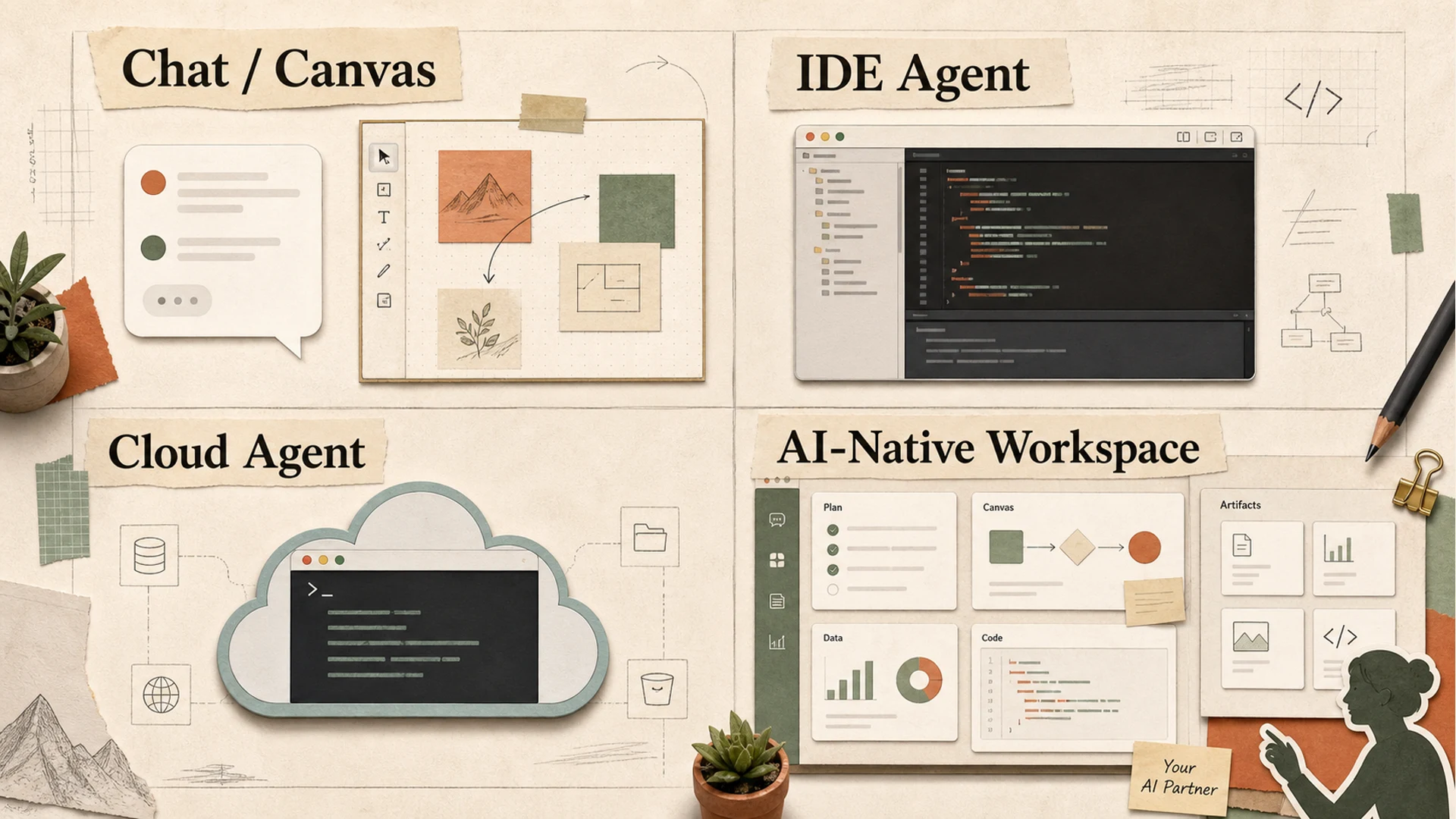 Workspace comparison map: Chat/Canvas, IDE Agent, Cloud Agent, and AI-Native Workspace
| Surface | Center of gravity | Strength | Limitation |
|---|---|---|---|
| Chat / canvas | conversation plus editable output | 빠른 아이디어와 초안 | multi-stream coordination이 약함 |
| IDE agent | codebase and developer loop | 강한 local implementation context | software workflows 밖에서는 좁음 |
| Cloud autonomous agent | long-running remote execution | delegated tasks에 유용 | opaque하면 inspect와 govern이 어려움 |
| AI-native workspace | sessions, artifacts, tools, and orchestration | cross-functional work에 적합 | product complexity와 governance burden 증가 |
Post-chat workspace는 하나의 universal UI가 아니라 여러 작업 모드를 담는 layered environment가 될 가능성이 높다.
6. Virtual Partner / Sprite: 연출이 아니라 orchestration
“virtual partner”는 gimmick이 되기 쉽다. Workspace 위에 떠 있는 얼굴은 context management를 해결하지 못한다. 유용한 버전은 workspace-level coordinator다. 목표를 sub-workstreams로 번역하고, sessions나 agents에 배정하고, blockers, open questions, finished outputs를 추적하고, artifact가 review할 준비가 되었는지 판단하고, 경쟁 drafts나 branches의 차이를 요약하며, days를 넘어 decision history를 보존한다.
Chatbot은 interlocutor이고 virtual partner는 coordinator다. MCPlato의 중요한 방향은 사용자가 여러 AI sessions를 coherent partner system으로 운영하도록 돕는 것이다. 단, orchestration은 어렵다. clear permissions, visible state, good failure handling이 필요하며 coordination은 inspectable해야 한다.
7. Competitor comparison: 숫자가 보여주는 것
시장은 structured workspaces로 이동하고 있지만 vendor마다 증명하는 지점이 다르다.
Claude and ChatGPT: chat에서 project context와 editable surfaces로
Claude Projects는 200K context window, 약 500-page book의 공유 context를 보여준다. Claude Artifacts는 보통 15 lines를 넘는 standalone outputs와 artifact당 20 MB persistent storage를 제공한다. ChatGPT Canvas는 생성 콘텐츠가 10 lines를 넘을 때 자동으로 열릴 수 있으며, ChatGPT Projects는 chats, uploaded files, instructions, collaborators를 project-level로 조직한다. 이들은 artifact와 project boundaries를 검증하지만 경험의 중심은 여전히 primary assistant conversation이다.
GitHub Copilot and Cursor: workspace로서의 codebase
Developer tools의 중심은 repository다. Microsoft는 GitHub Copilot이 20 million users를 보유하고 90% of the Fortune 100에서 사용되며 FY2025 Q4에 Copilot Enterprise customers가 75% quarter over quarter 성장했다고 보고했다. GitHub는 100 million developers 이상과 Copilot의 “up to 55%” productivity claim을 제시했다.
Cursor는 $29.3 billion post-money valuation으로 $2.3 billion을 조달했고, $1 billion in annualized revenue를 넘었으며, millions of developers와 300 employees 이상을 언급했다. Developer workspaces는 주요 AI operating environments가 되고 있다.
Replit and Devin: workspace로서의 cloud execution
Replit Agent 3는 최대 200 minutes 작업하고, 10x more autonomous하며, testing을 3x faster, 10x more cost-effective하게 만든다고 한다. Replit은 $9 billion valuation으로 $400 million을 조달했고, 50 million users 이상, 85% of the Fortune 500, 2026년 말 $1 billion run-rate revenue를 언급했다. Devin pricing은 Pro $20/month, Max $200/month, Teams $80/month, 관련 plans에서 최대 10 concurrent sessions를 제시한다.
Manus and Notion: breadth와 workspace memory
Manus Wide Research는 hundreds of independent agents, 최대 250 items, 몇 분 안의 50–100 items, 8–10 items 이후 전통 AI가 저하된다는 주장으로 parallel breadth를 보여준다. Notion은 $10 per 1,000 credits, **80%**와 100% usage notifications를 통해 AI를 durable team knowledge surfaces에 넣는다. 공통 신호는 AI가 answer generation에서 managed work systems로 이동한다는 점이다.
8. MCPlato가 맞는 위치
MCPlato는 pure chat product, IDE, cloud-only autonomous agent보다 AI-native workspace 범주에 가깝다. 강점은 connected materials를 가로질러 여러 AI sessions를 조정하고 reviewable outputs를 만드는 workflows에 있다. Research-to-article pipelines, multi-source analysis, document production, task decomposition, cross-session review, traceable decisions가 필요한 developer/architect workflows가 대표적이다.
MCPlato는 모든 specialized tool을 대체하지 않는다. Cursor와 GitHub Copilot은 coding inner loop에 가깝고, Claude와 ChatGPT는 general-purpose model interfaces에 강하며, Replit과 Devin은 cloud execution, Notion은 team knowledge bases에 깊다.
MCPlato의 기회는 그 사이의 coordination layer다.
- session-based work, task threads를 분리하되 연결한다.
- local-first material handling, connected directories와 files를 적절히 다룬다.
- artifact discipline, outputs를 deliverables로 만든다.
- multi-window context, parallel workstreams를 visible하게 유지한다.
- virtual partner orchestration, decompose, delegate, track, summarize를 돕는다.
- decision trace, 무엇이 왜 바뀌었는지 review하게 한다.
경계도 중요하다. Orchestration은 review를 없애지 않는다. Context boundaries가 불명확하면 multi-session AI work는 errors를 증폭한다. Virtual partner는 assumptions와 status를 노출해야 한다.
9. Conclusion: workspace가 product다
채팅 상자는 여전히 유용하다. 묻고, 명확히 하고, 반복하는 가장 빠른 방법이다. 그러나 serious AI work의 주된 container로는 충분하지 않다.
Post-chat AI workspace에는 네 계층이 필요하다.
- Chat for intent and dialogue.
- Artifacts for durable work objects.
- Runtime for execution state, evidence, and recovery.
- Virtual partners for cross-session coordination and continuity.
승자는 가장 똑똑한 assistant만 가진 곳이 아니다. 무엇을 만들고, 어디서 왔고, 무엇을 실행했고, 무엇이 실패했고, 무엇을 수용했고, 무엇이 unresolved인지 legible하게 만드는 곳이다. 시스템은 state가 명시적이고 boundaries가 분명하며 outputs를 inspect할 수 있을 때 신뢰할 수 있다.
References
- Anthropic, “Introducing Projects,” https://www.anthropic.com/news/projects
- Anthropic Support, “What are Artifacts and how do I use them?”, https://support.claude.com/en/articles/9487310-what-are-artifacts-and-how-do-i-use-them
- OpenAI Help Center, “What is the Canvas feature in ChatGPT and how do I use it?”, https://help.openai.com/en/articles/9930697-what-is-the-canvas-feature-in-chatgpt-and-how-do-i-use-it
- OpenAI Help Center, “Projects in ChatGPT,” https://help.openai.com/en/articles/10169521-projects-in-chatgpt
- Microsoft Investor Relations, “FY25 Q4 Earnings,” https://www.microsoft.com/en-us/investor/events/fy-2025/earnings-fy-2025-q4.aspx
- GitHub Blog, “GitHub Copilot Workspace,” https://github.blog/news-insights/product-news/github-copilot-workspace/
- Replit Blog, “Introducing Agent 3,” https://replit.com/blog/introducing-agent-3-our-most-autonomous-agent-yet
- Replit Blog, “Replit raises $400 million,” https://replit.com/blog/replit-raises-400-million-dollars
- Devin, “Pricing,” https://devin.ai/pricing/
- Manus Docs, “Wide Research,” https://manus.im/docs/features/wide-research
- Cursor Blog, “Series D,” https://cursor.com/blog/series-d
- Notion Help, “Everything you can do with Notion AI,” https://www.notion.com/help/guides/everything-you-can-do-with-notion-ai