チャット後の AI Workspace:Artifacts、マルチウィンドウ文脈、Virtual Partners
AI Workspace がチャットを越え、永続的な Artifacts、ランタイム規律、並列作業面、開発者とアーキテクト向けの Virtual Partners へ進む理由を整理した技術レポート。
AI chat は最先端モデルを使いやすくした。しかし AI の仕事を信頼できるものにしたわけではない。
開発者やアーキテクトにとって限界はすぐに見える。チャットは設計を説明し、移行計画を作り、ログを要約できる。だが実際の仕事は transcript の中に残らない。図、仕様、パッチ、調査ノート、テスト結果、pull-request コメント、インシデントのタイムライン、意思決定記録、後続タスクへ変わる。作業は分岐し、あるウィンドウは本番挙動を調べ、別のウィンドウはベンダー制約を比較し、別のウィンドウは設計メモを書き、さらに別のウィンドウは実装手順を準備する。
次の AI workspace は大きなチャット欄ではなく、work objects、execution state、parallel surfaces、delegated continuity を管理するシステムである。
この記事は四つの設計質問でこの変化を整理する。
- 仕事の対象は何か。 システムは答えを出しているのか、それとも検査、修正、出荷できる永続的 artifact を作っているのか。
- runtime truth はどこにあるのか。 workspace は発言、実行、変更を分けて扱えるのか。
- いくつの surface を並列に持てるのか。 複数の windows、sessions、panes、contexts を一つの thread に潰さず保持できるのか。
- 誰が continuity を保つのか。 workspace レベルの virtual partner が作業を分解、委任、追跡、統合できるのか。
今や重要なのはチャット画面の有無ではない。Chat は入口であり、workspace は control plane である。
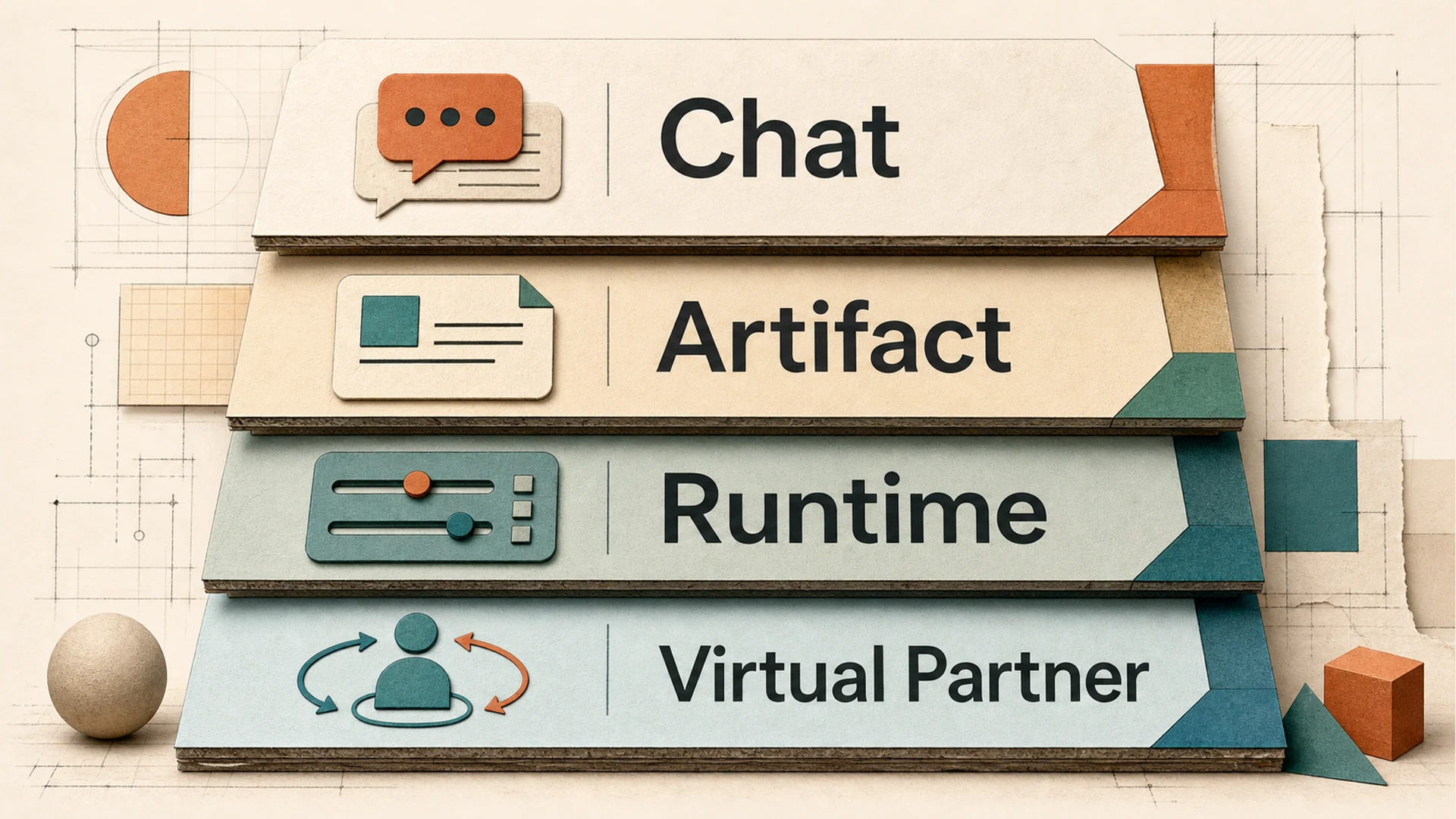 Four layers of AI work: Chat, Artifact, Runtime, and Virtual Partner
1. なぜチャット欄だけでは足りないのか
チャット欄は対話には優れているが、仕事の境界を保存するのは苦手である。一つの transcript は、ユーザー意図、モデルの推論、tool results、deliverable になるか不明な drafts、残すべき decisions、一時的な failures、監査や再実行が必要な action history を混ぜてしまう。
短い Q&A なら許容できる。しかし AI が複数ステップの workflow を実行し、files と連携し、tools を使い、sessions 間で作業を渡すと脆弱になる。ソフトウェアでは logs、source files、builds、tests、deployment state、issue comments は関連していても同じ文字列として保存しない。同じ原則が AI workspaces にも当てはまる。会話、出力、runtime state、長期の decision memory は分離される必要がある。
2. Post-chat AI workspaces の四つの設計質問
Question 1: 何が work object なのか
Response は一時的で、artifact は永続的である。Chat-first system では価値の単位は answer になりがちだが、workspace-first system では document、code patch、research table、diagram、test plan、decision log、spreadsheet、presentation、task board などの work object が単位になる。それは状態を持ち、生成されたターンを超えて残り、会話全体を再生しなくてもレビューできるべきである。
Artifact と canvas のパターンが重要になった理由はここにある。Claude は Artifacts を独立した実質的コンテンツ、通常 15 lines 超として説明し、サポート文書は artifact ごとに 20 MB の永続ストレージを示す。ChatGPT Canvas も長い生成内容を別扱いし、OpenAI は生成内容が 10 lines を超えると Canvas が自動で開く場合があると述べている。重要な AI 出力には独自の surface が必要だという合図である。
深い問いは side panel の有無ではなく、artifact に draft、inspect、revise、validate、complete、必要なら hand off という lifecycle があるかである。
Question 2: runtime truth はどこにあるのか
Transcript は会話の記録だが、実行の真実として常に最適ではない。Agent が files を編集し、外部 tools を呼び、browser を開き、documents を読み、tests を走らせるなら、workspace はモデルの発言だけでなく、何を試し、何が完了し、何が失敗し、何が変わり、どの evidence が結果を支えるかを知る必要がある。
この分離は reliability、recovery、governance を高める。ユーザーは「本当に check を実行したのか、ただそう言っただけか」を確認できる。長時間作業が途中で失敗しても execution state があれば安全に再開や迂回ができる。チームでは instruction、action、result、decision を分けた audit trail が重要になる。
原則は単純である。transcript は仕事を説明すべきだが、仕事が存在する唯一の場所であってはならない。
Question 3: ユーザーはいくつの並列 surface を持てるのか
AI work は multi-window になっている。古い形は一人の user と一つの assistant と一つの thread だった。新しい形は複数レイヤーの workspace である。
- Workspace: materials、sessions、preferences を囲む永続境界。
- Session: task-focused conversation または workstream。
- Tab: 並列 attention の可視単位。
- Pane: artifact、browser、terminal、document、comparison view の局所 surface。
- Window: 異なる phase や project を入れる OS レベルの container。
この階層は見た目ではなく、実際の仕事の反映である。開発者は architecture trade-offs、implementation、testing、release notes を別々の sessions に分ける。優れた multi-window AI workspace は単なる画面の広さではなく、context partitioning system である。
Question 4: 誰が continuity を保つのか
Artifacts と windows の次は workspace-level partner である。これは avatar や飾りではなく、workspace goal を理解し、work を分解し、subtasks を委任し、progress を追跡し、missing evidence を見つけ、decisions を要約する orchestrator に近い。ユーザーは判断を持ち、partner は operational memory を保つ。
Virtual partner、または sprite-like workspace presence は、active、blocked、complete の sessions、current candidate deliverable、未検証 assumptions、final output に統合すべき branch、隔離すべき context を示す coordination layer になる。
3. Artifact discipline: 返信から deliverables へ
Artifacts は UI 機能として紹介されがちだが、重要なのは discipline である。Claude Artifacts と ChatGPT Canvas は、生成された仕事に別の編集可能 surface が必要だと示している。Claude Projects は 200K context window、約 500-page book に相当する project context model を加える。ChatGPT Projects は chats、files、instructions に workspace-like boundaries を与える。
MCPlato にとって重要な原則は、出力を stateful で reviewable にすることである。実用的な artifact discipline には次が含まれる。
- stateful deliverables、会話断片だけではない。
- phase awareness、draft、candidate、final output を区別する。
- context and tool isolation、無関係な assumptions や permissions を継承させない。
- completion checks、done は evidence と constraints の確認を意味する。
- decision trace、なぜ artifact がその形になったかを説明する。
これは “autonomous agent” より地味だが有用である。専門ユーザーが必要とするのは、信頼し、検査し、変更できる objects を残す AI である。
4. Runtime と monolith 問題
多くの AI products は chat thread、tool runner、file picker、memory layer、UI が一体の monolith として始まる。初期には自然だが、workflows が大きくなると限界になる。Workspace runtime は少なくとも四つの truth を調整する必要がある。
- Conversation truth: user が尋ね、assistant が返したこと。
- Material truth: 使用された source files、documents、pages、data。
- Execution truth: 実行された actions と返った results。
- Decision truth: team が accepted、rejected、deferred、shipped したこと。
すべてを transcript に押し込むと inspect しにくい。分離しても user experience が一貫しなければ fragmented になる。関心を分離しつつ仕事を legible に保つことが課題である。
5. Multi-window context: 一つの thread から多くの work surfaces へ
Agents が強力になるほど single thread は足りなくなる。Research、drafting、source checks、formatting、implementation、testing は自然には並列だが、単一 thread では直列化される。Multi-window AI workspace は coherent なまま parallelism を支えるべきである。
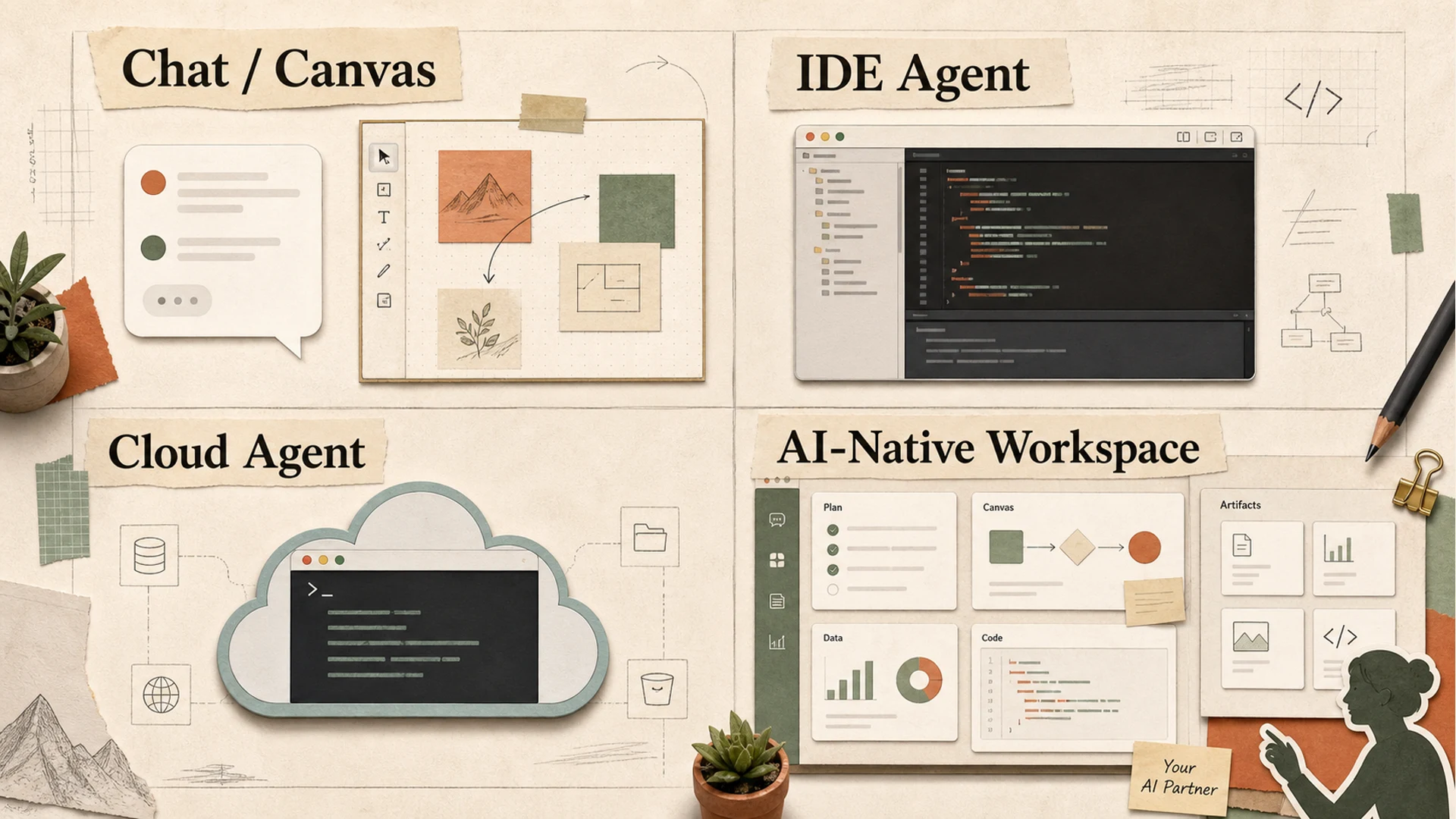 Workspace comparison map: Chat/Canvas, IDE Agent, Cloud Agent, and AI-Native Workspace
| Surface | Center of gravity | Strength | Limitation |
|---|---|---|---|
| Chat / canvas | conversation plus editable output | 速い発想と草稿作成 | multi-stream coordination が弱い |
| IDE agent | codebase and developer loop | 強い local implementation context | software workflows 以外では狭い |
| Cloud autonomous agent | long-running remote execution | delegated tasks に有用 | opaque だと inspect と govern が難しい |
| AI-native workspace | sessions, artifacts, tools, and orchestration | cross-functional work に合う | product complexity と governance burden が増える |
Post-chat workspace は万能 UI ではなく、複数の作業モードを載せる layered environment になる。
6. Virtual Partner / Sprite: 演出ではなく orchestration
“virtual partner” は gimmick になりやすい。workspace 上の顔だけでは context management は解決しない。有用な形は workspace-level coordinator であり、目標を sub-workstreams に変換し、sessions や agents に割り当て、blockers、open questions、finished outputs を追跡し、artifact の review readiness を判断し、drafts や branches の違いを要約し、days をまたいで decision history を保持する。
Chatbot は interlocutor、virtual partner は coordinator である。MCPlato にとって、複数の AI sessions を一つの coherent partner system として運用できるようにすることは重要な public design direction である。ただし orchestration は難しい。clear permissions、visible state、good failure handling が必要であり、coordination は inspectable でなければならない。
7. Competitor comparison: 数字が示すこと
市場は structured workspaces へ進んでいるが、各 vendor は別の点を証明している。
Claude and ChatGPT: chat から project context と editable surfaces へ
Claude Projects は 200K context window、約 500-page book の shared context を示す。Claude Artifacts は 15 lines 超の substantial standalone outputs と artifact ごとの 20 MB persistent storage を示す。ChatGPT Canvas は生成内容が 10 lines を超えると自動で開く場合があり、ChatGPT Projects は chats、uploaded files、instructions、collaborators を project-level に整理する。これらは artifact と project boundaries を検証しているが、中心はまだ primary assistant conversation である。
GitHub Copilot and Cursor: workspace としての codebase
Developer tools の重心は repository である。Microsoft は GitHub Copilot が 20 million users を持ち、90% of the Fortune 100 に使われ、FY2025 Q4 に Copilot Enterprise customers が 75% quarter over quarter 成長したと報告した。GitHub は 100 million developers を超える基盤と Copilot の “up to 55%” productivity claim を示した。
Cursor は $2.3 billion を $29.3 billion post-money valuation で調達し、$1 billion in annualized revenue を超え、millions of developers と 300 employees 超を示した。Developer workspaces は主要な AI operating environments になりつつある。
Replit and Devin: workspace としての cloud execution
Replit Agent 3 は最大 200 minutes 作業でき、10x more autonomous、testing を 3x faster かつ 10x more cost-effective にするとされる。Replit は $400 million を $9 billion valuation で調達し、50 million users 超、85% of the Fortune 500、2026 年末までの $1 billion run-rate revenue を発表した。Devin は Pro $20/month、Max $200/month、Teams $80/month、関連 plans で最大 10 concurrent sessions を示す。焦点は delegation と execution だが、inspectability が課題である。
Manus and Notion: breadth と workspace memory
Manus Wide Research は hundreds of independent agents、最大 250 items、数分で 50–100 items、従来 AI は 8–10 items を超えると劣化するという主張で parallel breadth を示す。Notion は $10 per 1,000 credits、80% と 100% の usage notifications で、AI を durable team knowledge surfaces に埋め込む方向を示す。共通の信号は、AI が answer generation から managed work systems へ移ることだ。
8. MCPlato の位置
MCPlato は pure chat product、IDE、cloud-only autonomous agent ではなく AI-native workspace に位置づく。強みは connected materials をまたいで複数の AI sessions を調整し、reviewable outputs を作る workflows にある。Research-to-article pipelines、multi-source analysis、document production、task decomposition、cross-session review、traceable decisions が必要な developer/architect workflows が典型である。
MCPlato はすべての specialized tool を置き換えるわけではない。Cursor と GitHub Copilot は coding inner loop、Claude と ChatGPT は general-purpose model interfaces、Replit と Devin は cloud execution、Notion は team knowledge bases に強い。
MCPlato の機会はその間の coordination layer にある。
- session-based work、task threads を分けつつ接続する。
- local-first material handling、connected directories と files を適切に扱う。
- artifact discipline、outputs を deliverables にする。
- multi-window context、parallel workstreams を visible にする。
- virtual partner orchestration、decompose、delegate、track、summarize を助ける。
- decision trace、何がなぜ変わったかを review できるようにする。
境界も重要である。Orchestration は review を不要にしない。Context boundaries が曖昧なら multi-session AI work は errors を増幅する。Local-first workflows は permission management を必要とする。Virtual partner は assumptions と status を公開しなければならない。
9. Conclusion: workspace が product である
チャット欄は今後も有用である。質問、確認、反復には最速だ。しかし serious AI work の主な container としては不十分である。
Post-chat AI workspace には四層が必要である。
- Chat for intent and dialogue.
- Artifacts for durable work objects.
- Runtime for execution state, evidence, and recovery.
- Virtual partners for cross-session coordination and continuity.
勝者は最も賢い assistant を持つだけではない。何が作られ、どこから来て、何が実行され、何が失敗し、何が受け入れられ、何が未解決かを legible にする。開発者とアーキテクトにはなじみの教訓である。状態が明示され、境界が明確で、出力を検査できるとき、systems は信頼できる。
References
- Anthropic, “Introducing Projects,” https://www.anthropic.com/news/projects
- Anthropic Support, “What are Artifacts and how do I use them?”, https://support.claude.com/en/articles/9487310-what-are-artifacts-and-how-do-i-use-them
- OpenAI Help Center, “What is the Canvas feature in ChatGPT and how do I use it?”, https://help.openai.com/en/articles/9930697-what-is-the-canvas-feature-in-chatgpt-and-how-do-i-use-it
- OpenAI Help Center, “Projects in ChatGPT,” https://help.openai.com/en/articles/10169521-projects-in-chatgpt
- Microsoft Investor Relations, “FY25 Q4 Earnings,” https://www.microsoft.com/en-us/investor/events/fy-2025/earnings-fy-2025-q4.aspx
- GitHub Blog, “GitHub Copilot Workspace,” https://github.blog/news-insights/product-news/github-copilot-workspace/
- Replit Blog, “Introducing Agent 3,” https://replit.com/blog/introducing-agent-3-our-most-autonomous-agent-yet
- Replit Blog, “Replit raises $400 million,” https://replit.com/blog/replit-raises-400-million-dollars
- Devin, “Pricing,” https://devin.ai/pricing/
- Manus Docs, “Wide Research,” https://manus.im/docs/features/wide-research
- Cursor Blog, “Series D,” https://cursor.com/blog/series-d
- Notion Help, “Everything you can do with Notion AI,” https://www.notion.com/help/guides/everything-you-can-do-with-notion-ai