MCPlato vs Perplexity: From Cited Answers to Long-Running Work
As of June 2026, Perplexity is excellent for sourced answers and browser-assisted research, while MCPlato is designed to turn research into long-running work artifacts, decisions, and permissioned desktop execution.
As of June 2026, the short answer is this: Perplexity is excellent for sourced answers and browser-assisted research; MCPlato is designed to carry that research into long-running work artifacts and decisions. If the job is to ask a question, retrieve fresh web evidence, compare sources, and get a concise cited answer, Perplexity should usually be evaluated first. If the job is to transform that evidence into a durable report, spreadsheet, PDF, workflow, scheduled follow-up, approval path, or local desktop operation, MCPlato is designed for the next stage of work.
That distinction matters because the AI market often compresses very different products into the same phrase: “AI assistant.” Perplexity is not merely a chatbot with search. AWS describes it as a generative-AI answer engine that synthesizes real-time answers with citations and follow-up questions.AWS on Perplexity Perplexity's Sonar docs expose cited answer fields such as citations and search_results, while its Search API returns ranked real-time web results with fields such as title, URL, snippet, date, and last updated.Perplexity Sonar quickstart Perplexity Search quickstart
MCPlato starts from a different operating question: what happens after the answer? Publicly, MCPlato positions itself as The Desktop AI Engine: a self-evolving AI agent that reads, writes, executes, and iterates locally on the user's machine.MCPlato In this series, that makes it reasonable to describe MCPlato as a Personal Agent OS, AI Partner/Sprite, desktop AI coworker, and workspace operator. The point is not to replace Perplexity's search index, citation system, answer engine, AI browser, or consumer adoption. The point is to carry research into work.
What Perplexity is best for
Perplexity is best when a user wants a sourced answer quickly and wants to keep exploring. Its center of gravity is the research moment: ask, retrieve, synthesize, cite, follow up. That is why Perplexity is often described as an AI search or answer engine rather than a general office automation platform. Its API documentation reinforces this positioning. The Sonar quickstart shows answer generation with citations and search result fields; the Search API quickstart emphasizes real-time ranked web results, not LLM prose summaries, with documented result limits from 1 to 20.Perplexity overview Perplexity Search quickstart
Perplexity also has deeper research surfaces. Its sonar-deep-research model is documented for exhaustive research workflows across hundreds of sources, including reports, market analysis, due diligence, and investigative research.Sonar Deep Research MediaPost reported that consumer Deep Research can perform dozens of searches, read hundreds of sources, and produce cited reports.MediaPost on Perplexity Deep Research
Nor is Perplexity only “search.” Public reporting describes Pages for fully sourced reports and articles, Labs for creating spreadsheets, dashboards, and web apps, Internal Knowledge Search for Pro and Enterprise Pro users, and Spaces with access-control and data-protection features.CNET on Perplexity Pages SiliconANGLE on Perplexity Labs The Decoder on Internal Knowledge Search Its Agent API docs also describe access to models from OpenAI, Anthropic, Google, xAI, and others through one interface with web-search tools.Perplexity Agent API quickstart
The browser layer is another important differentiator. Perplexity's official Comet page was not accessible from the research environment, but PPC Land and afaqs reported that Comet is Perplexity's AI browser, initially limited in July 2025 and made globally/free publicly in October 2025, with a tab assistant, summarization, task handling, Background Assistants, Email Assistant, and Chromium or Chrome extension support.PPC Land on Comet afaqs on Comet Perplexity also has consumer distribution through mobile apps and browser extensions.Perplexity Android app Perplexity Chrome extension
What MCPlato is trying to be
MCPlato is trying to be the operating layer around AI work on the desktop. Its public framing is The Desktop AI Engine: an AI agent that can read, write, execute, and iterate locally. In practical terms, that means the work surface is broader than a search answer or a browser tab. MCPlato supports documents, spreadsheets, PDFs, screenshots, browser work, media tools, meeting summaries, local documents, and code-review workflows. The product thesis is that users increasingly need an AI coworker that can operate across materials and produce inspectable artifacts.
This is why the Personal Agent OS framing is useful. A person may begin with a Perplexity research answer, but the actual job might require a comparison matrix, a board memo, a spreadsheet with assumptions, a PDF pack, an executive summary, a follow-up calendar task, a localized article, or a code-review checklist. Those outputs are not just “answers.” They are work artifacts with ownership, context, permissions, and revision cycles.
ClawMode extends that posture. Publicly, MCPlato describes ClawMode as a way to turn an MCPlato workspace into an always-on operator with scheduled jobs, event triggers, approvals, tools, context, and result delivery back to chat channels.MCPlato ClawMode In other words, the workspace can keep moving after the initial prompt: wait for a trigger, run a job, ask for approval, use tools, and deliver results. MCPlato also describes a Skill System, Distill, many integrations, and built-in MCP tools. The safe public framing is high-level: repeatable workflows, permissioned execution, and local-material continuity, not implementation details.
 Abstract split comparison map between a sourced answer constellation and a local workspace artifact layer, with no official logos and no partnership or endorsement implied
Figure 1: Perplexity-style sourced research and MCPlato-style workspace operation have different centers of gravity. This editorial image uses no official logos and implies no partnership, sponsorship, or endorsement.
Side-by-side comparison
| Dimension | Perplexity | MCPlato | Practical decision |
|---|---|---|---|
| Primary job-to-be-done | Sourced answers, AI search, research assistance, follow-up exploration. | Desktop AI Engine and Personal Agent OS for artifacts, decisions, and operations. | Start with the product that matches the work unit. |
| Web research and cited answers | Strong answer-engine UX, citations, Sonar cited answers, Search API real-time ranked results. | Can use browser and materials, but does not claim to replace Perplexity's search index or citation engine. | Perplexity wins. |
| Browser layer | Comet is reported as an AI browser with tab assistance, summarization, task handling, and extensions. | Browser work is one part of a broader desktop workspace operator. | Perplexity leads in public browser visibility; MCPlato differs in workflow scope. |
| Research-to-artifact workflow | Pages, Deep Research, Labs, and reports help package research. | Designed to carry research into documents, spreadsheets, PDFs, media, approvals, schedules, and decisions. | MCPlato wins when artifacts must be operated over time. |
| Local-first materials and permissions | Strongest public privacy statements in the brief are scoped to Sonar API. | Local files, tools, and knowledge can stay on-device with permission controls and multiple permission levels. | MCPlato is stronger for local desktop control; evaluate enterprise policies separately. |
| Enterprise and security governance | Sonar API docs say customer API data is not retained or used to train models, with operational metadata collection only; SOC 2 Type II report is listed via Trust Center. | Emphasizes user-controlled materials, explicit permissions, approvals, and workspace-level operation. | Mixed; require procurement review. |
| Model/API ecosystem | Agent API exposes multiple model providers through one interface; Search API and Sonar pricing are documented. | Focuses on choosing tools and skills for the job rather than being a search/model marketplace. | Perplexity wins for search/model API access. |
| Long-running operations | Deep Research and reported browser assistants support longer research flows. | ClawMode supports scheduled jobs, triggers, approvals, context, tools, and result delivery. | MCPlato wins for workspace operations. |
| Skills, MCP, repeatable workflows | Agent API tool use and product surfaces support structured research and tasking. | Skill System, Distill, integrations, and built-in MCP tools make recurring desktop workflows reusable. | MCPlato is stronger for repeated mixed-work artifacts. |
| Cost and routing discipline | Clear API unit pricing for Search, Sonar Deep Research, and Agent API tools; consumer pricing mostly media-reported in this brief. | Value depends on routing tasks by risk, modality, local context, and artifact type. | Compare by total workflow cost, not only subscription price. |
| Market and ecosystem lead | Stronger public visibility, consumer adoption, browser narrative, and funding coverage. | Earlier and narrower as a Personal Agent OS category narrative. | Perplexity wins on market visibility. |
Cost, pricing, and long-horizon task analysis
Pricing is where short AI demos often mislead teams. A single sourced answer may be inexpensive. A multi-day research-to-decision workflow can involve search calls, citations, long context, spreadsheets, document generation, browser work, human approvals, and repeated revisions. The correct question is not “which product has the cheapest headline tier?” It is “which product makes the end-to-end work economical and inspectable?”
Perplexity's official API pricing is concrete. The Search API is listed at $5 per 1,000 requests with no token costs. The Agent API documentation says third-party model pricing is passed through at direct provider rates with no markup, while tool prices include web_search at $0.005 per invocation, fetch_url at $0.0005 per invocation, and sandbox at $0.03 per session. Sonar Deep Research API pricing is listed as $2 per 1M input tokens, $8 per 1M output tokens, $2 per 1M citation tokens, $5 per 1,000 search queries, and $3 per 1M reasoning tokens.Perplexity pricing
Consumer and enterprise pricing should be framed more carefully. PYMNTS reported Perplexity Max at $200/month or $2,000/year, and also reported Pro at $20/month or $200/year; treat those as media-reported figures rather than independently verified official pricing from the inaccessible consumer pricing page.PYMNTS on Perplexity Max Metronome's Pricing Index reports Enterprise Pro at $40/seat/month or $400/seat/year, also as a non-official pricing index rather than Perplexity's own confirmed plan page.Metronome Pricing Index: Perplexity AI PPC Land reported that Comet became globally free in October 2025 after initially being limited to Max subscribers and waitlist users.PPC Land on Comet
MCPlato's cost lens is different. Its value is not that it has a cheaper search index than Perplexity. It does not claim that. Its value appears when the job decomposes into many work units: research intake, local file reading, table extraction, image generation, spreadsheet cleanup, PDF assembly, browser action, code-adjacent review, approval routing, and follow-up delivery. A Personal Agent OS can treat those as separate sessions or skills rather than one giant prompt. That creates a path to model and tool routing discipline: use strong research when evidence matters, lighter execution when the task is mechanical, and explicit approval when the task affects files, browsers, or shared channels.
For long-horizon tasks, this distinction is decisive. Perplexity is optimized for finding and synthesizing evidence. MCPlato is optimized for carrying the evidence forward. If a team stops at a cited answer, Perplexity may be the more efficient tool. If the team needs the answer to become a decision log, a spreadsheet model, an approved memo, and a scheduled follow-up workflow, MCPlato's artifact and operation layer becomes the economic center.
Enterprise and security lens
Perplexity has notable public enterprise signals. AWS says Perplexity Enterprise Pro has been adopted by Databricks, HP, Zoom, and the Cleveland Cavaliers.AWS on Perplexity The Decoder reported Internal Knowledge Search for Pro and Enterprise Pro users, combining the public web with internal knowledge bases, and described Spaces with access control and data protection features.The Decoder on Internal Knowledge Search PYMNTS reported a $20 billion valuation following a new funding round, while third-party statistics pages such as Backlinko track Perplexity's adoption and market visibility as a fast-growing AI search product.PYMNTS on Perplexity valuation Backlinko Perplexity statistics
For privacy and security, the safest public claims are scoped. Perplexity's privacy and security docs state that Sonar API does not retain data sent via the API, that customer API data is not used to train models or for purposes beyond processing the immediate request, and that Sonar API collects operational metadata only: token count, model used, timestamp or duration, and API key identification, not prompt or response content.Perplexity privacy and security The docs also list a SOC 2 Type II report via Trust Center, a 2025 HIPAA Gap Assessment, and CAIQlite, although the Trust Center itself may render as a JavaScript app shell in fetch-based research.Perplexity Trust Center
The brief did not verify official SSO, SAML, SCIM, admin-control details, official Free/Pro/Max/Business/Enterprise pricing and limits, or enterprise data-retention policy outside Sonar API; some official pricing and limits pages were unavailable in the research environment due to 403. Buyers should not infer those details from the answer-engine story alone. They should run procurement review, ask for current documentation, and test the relevant plan.
MCPlato's public enterprise posture should also be framed carefully. Local-first materials, permission controls, and multiple permission levels can reduce unnecessary data movement and help users decide when an AI partner may read, write, browse, execute, or ask for approval. But local-first is not a magic compliance certificate. MCPlato's more objective advantage is operational: it can keep connected files, tools, knowledge, artifacts, and approvals close to the user's desktop workspace while making long-running jobs more explicit.
Workflow scenario: Perplexity for research, MCPlato for decisions
Imagine a strategy team evaluating whether to enter a new market.
-
Use Perplexity for sourced discovery. Ask Perplexity for the market overview, recent regulatory developments, competitor moves, public company signals, and risks. Use follow-up questions to pressure-test the answer. Use Deep Research when the task deserves a cited report across many sources. Use Search API or Sonar outputs when the workflow needs citations, search results, snippets, dates, and URLs.
-
Export the evidence into a work packet. The team now has source links, claims, caveats, and open questions. At this stage, the answer is useful but incomplete. It needs to become a matrix, decision memo, financial model, and stakeholder-ready artifact.
-
Use MCPlato to build artifacts. MCPlato can organize the sources, extract assumptions, create a comparison table, draft a memo, prepare a spreadsheet, assemble a PDF pack, summarize meeting notes, and keep related local files under permission controls. The user reviews artifacts rather than scrolling through a long chat.
-
Use ClawMode for follow-through. If the decision process continues over days or weeks, ClawMode can run scheduled checks, watch for event triggers, request approvals, use tools, and deliver results back to chat channels. This is where an answer becomes an operating workflow.
-
Use the right tool again. If a new fact is needed, return to Perplexity. If a revised artifact, approval, local file operation, or repeated workflow is needed, return to MCPlato. The products are complementary when teams respect their centers of gravity.
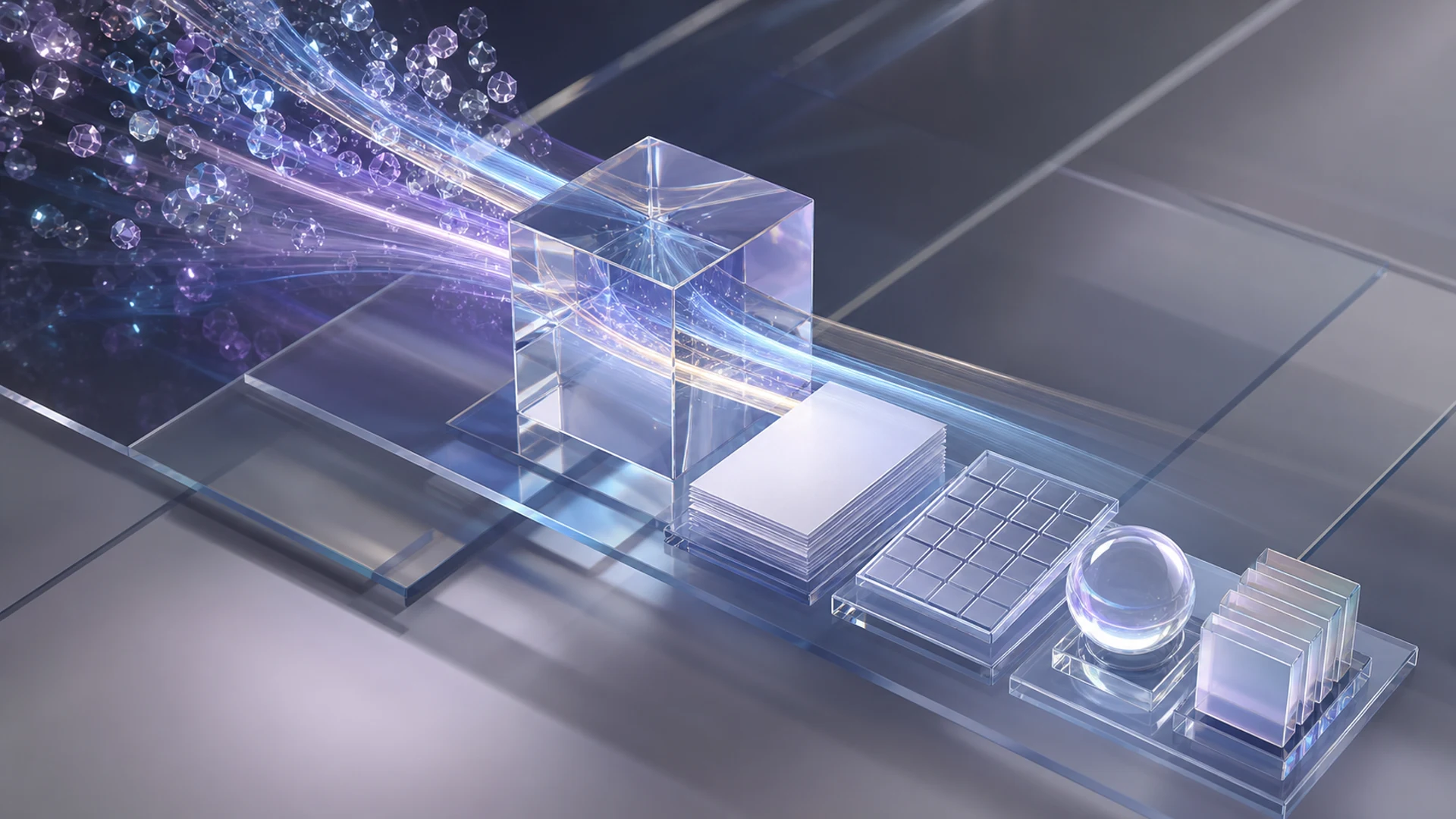 Abstract workflow of cited sources flowing into decision artifacts, scheduled approvals, and desktop work outputs, with no official logos and no partnership or endorsement implied
Figure 2: A practical workflow can use Perplexity for sourced research and MCPlato for artifacts, decisions, approvals, and follow-through. This is an editorial scenario only; no partnership, sponsorship, or endorsement is implied.
Where Perplexity wins
Perplexity wins in AI search and answer-engine leadership. Its product identity is built around fresh retrieval, concise synthesis, citations, and follow-up exploration. For a user who needs a quick sourced answer, a web-grounded comparison, or a research thread that stays close to sources, Perplexity is the more natural starting point.
It also wins in citation quality and search UX. Sonar's cited-answer fields and Search API result fields make Perplexity attractive for developers and teams building retrieval-heavy products or workflows. The Search API's role is especially clear: it returns real-time ranked web results rather than pretending every search task should become a prose answer.
Perplexity wins in browser-assisted research visibility. Comet's public rollout, as reported by PPC Land and afaqs, gives Perplexity a recognizable browser story. Even if a user should verify current feature availability directly, the market narrative is strong: Perplexity is moving from answer engine to research browser.
It wins in market visibility and ecosystem gravity. Consumer apps, browser extensions, API docs, third-party adoption reporting, funding coverage, and enterprise customer examples make Perplexity easier for many buyers to recognize and benchmark. NVIDIA's 2026 AI ecosystem news also illustrates the broader partnership environment in which AI infrastructure and model providers are expanding rapidly.NVIDIA news
Finally, Perplexity wins in API search and model ecosystem. Search API, Sonar, Sonar Deep Research, and Agent API give developers a clear way to build around sourced answers, search retrieval, tool invocations, and multi-model access.
Where MCPlato wins
MCPlato wins when the unit of value is a durable work artifact. A cited answer is only the beginning of many professional workflows. The real deliverable may be a memo, spreadsheet, PDF, localized article, product brief, meeting summary, code-review packet, image set, or decision log. MCPlato is designed around that artifact journey.
It wins in local-first materials and permissions. Local documents, screenshots, PDFs, spreadsheets, browser tasks, media files, and code-adjacent work often sit on the user's machine. MCPlato's public positioning around desktop execution, local iteration, and permission levels fits teams that want more explicit control over what an AI partner may access and do.
It wins in long-running workspace operations. ClawMode's scheduled jobs, event triggers, approvals, tools, context, and result delivery back to channels are not the same job as producing a cited answer. They describe an operator pattern: keep working, check conditions, ask for approval, run the next step, and report back.
It wins in repeatable operational skills. Skill System, Distill, integrations, and built-in MCP tools give MCPlato a natural way to turn repeated work into reusable workflows. That matters when a team repeats the same research-to-report pipeline, spreadsheet cleanup, PDF review, media workflow, or release-note process.
Most importantly, MCPlato wins in permissioned desktop execution across modalities: documents, spreadsheets, PDFs, screenshots, browser work, media tools, meeting summaries, local documents, and code-review workflows. Perplexity can be the answer engine. MCPlato can be the workspace operator that turns answers into action.
FAQ
Is MCPlato a replacement for Perplexity?
No. Perplexity should not be reduced to a generic chatbot, and MCPlato should not claim to replace Perplexity's search index, answer engine, citation system, AI browser, or consumer adoption. Perplexity is stronger for sourced answers and browser-assisted research. MCPlato is designed for the next stage: artifacts, decisions, local materials, approvals, scheduled jobs, and desktop execution.
Should researchers start with Perplexity or MCPlato?
Start with Perplexity when the immediate need is fresh, cited web research. Start with MCPlato when the job already involves local files, documents, spreadsheets, PDFs, recurring operations, or multiple deliverables. Many serious workflows should use both.
What is the simplest buying rule?
If the value is the answer, start with Perplexity. If the value is the artifact and follow-through, start with MCPlato. If the workflow begins with web evidence and ends with a decision packet, use Perplexity first and MCPlato second.
Which product is better for enterprise security?
There is no universal answer without plan-specific documentation and procurement review. Perplexity has useful Sonar API privacy/security documentation and enterprise signals, but some official details were unavailable in the research environment. MCPlato's advantage is local-first materials, permission controls, and user-approved desktop operation. Buyers should evaluate both against data classification, retention, admin, audit, and approval requirements.
How should teams think about cost?
Do not compare only monthly subscription labels. For Perplexity, official API pricing gives clear per-request, token, citation, search, tool, and sandbox costs. For consumer and enterprise tiers, use media-reported pricing with caution unless verified directly. For MCPlato, evaluate the cost of end-to-end artifact production: fewer context resets, better tool routing, repeatable skills, and less manual work after research.
Does Perplexity have artifact features too?
Yes. Public reporting describes Pages, Labs, Spaces, Internal Knowledge Search, Deep Research, and Comet. That is why the comparison should not say Perplexity is “only search.” The distinction is emphasis: Perplexity leads in sourced research and answer UX; MCPlato is designed around broader desktop operation and long-running work artifacts.
When should teams combine Perplexity and MCPlato?
Combine them when a decision needs both high-quality source discovery and durable execution. Use Perplexity for cited research, freshness, and source exploration. Use MCPlato to convert that research into memos, spreadsheets, PDFs, approvals, scheduled follow-ups, browser actions, and reusable operational workflows.
Conclusion
Perplexity and MCPlato are best understood as different layers of the AI work stack. Perplexity is the stronger answer engine: search, synthesis, citations, follow-up exploration, Deep Research, browser-assisted discovery, and API access to web-grounded results. MCPlato is the workspace operator: local materials, permissioned tools, artifacts, scheduled work, approvals, skills, and long-running follow-through.
The practical strategy is not to force a replacement narrative. Let Perplexity do what it does best: find and cite evidence. Let MCPlato do what it is designed to do: turn evidence into work artifacts and decisions that continue beyond the first answer.
References
- Perplexity documentation overview
- Perplexity Sonar quickstart
- Perplexity Search API quickstart
- Perplexity Agent API quickstart
- Perplexity pricing documentation
- Perplexity Sonar Deep Research model documentation
- Perplexity privacy and security documentation
- Perplexity Trust Center
- Perplexity Android app listing
- Perplexity AI Search Chrome extension listing
- AWS: Reimagining search with Perplexity's generative-AI answer engine
- NVIDIA news: European model builders and cloud providers
- MediaPost: Perplexity launches Deep Research project
- SiliconANGLE: Perplexity introduces Labs
- The Decoder: Perplexity introduces Internal Knowledge Search
- CNET: Perplexity Pages writes sourced reports and articles
- PPC Land: Perplexity releases Comet browser globally at no cost
- afaqs: Perplexity launches Comet free worldwide
- PYMNTS: Perplexity launches $200/month subscription tier
- PYMNTS: Perplexity valuation hits $20 billion
- Metronome Pricing Index: PerplexityAI
- Backlinko: Perplexity statistics
- MCPlato official website
- MCPlato ClawMode