
Claude Fable 5’s System Prompt Points to the Harness Era
Anthropic’s official Claude system prompt release notes show a shift from smarter chat toward agent operating manuals. Here is why that shift makes harnesses, artifacts, permissions, and MCPlato-style workspaces matter.
Claude Fable 5’s System Prompt Points to the Harness Era
Anthropic’s official Claude system prompt release notes are worth reading not because they reveal a magic trick, but because they show a product direction. The notes publish dated snapshots of the core prompts used by Claude’s web interface (claude.ai) and iOS/Android mobile apps. Anthropic is explicit about the boundary: these updates do not apply to the Claude API. That distinction matters. We should not treat the page as an API prompt, and we should not treat it as a license to copy or operationalize private prompt text.
What the page does show is a steady change in what a frontier model is being prepared to do. The prompts are becoming less like a chatbot personality sheet and more like an agent operating manual: how to use tools, when to clarify, how to cite, how to handle files, how to behave around safety boundaries, how to recover from uncertainty, and how to work inside a product surface.
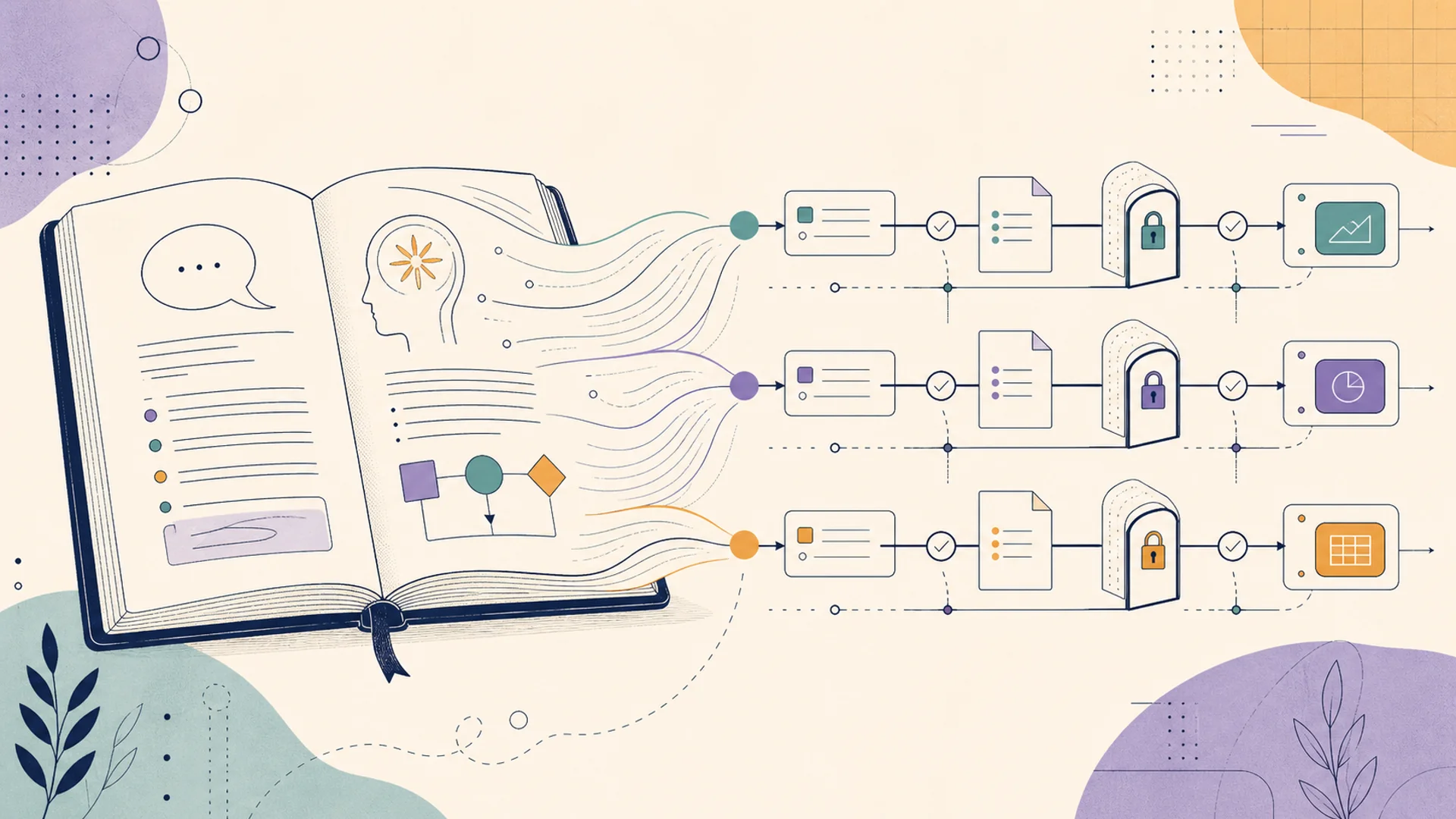 Editorial illustration of an operating manual turning into agent workflow lanes
Figure 1: The system prompt trend is moving from “answer the user” toward “operate safely inside a workbench.”
Use the official name Claude Fable 5. Its API model ID is claude-fable-5. Anthropic also discusses Claude Mythos 5 (claude-mythos-5), but the two should not be casually merged. Claude Fable 5 is the generally available model; Mythos 5 has restricted availability. For this article, the important point is not model marketing. It is that the newest Claude chat-interface prompt reads like a signpost for a broader industry shift: the model is expected to be part of a harness.
From enhanced assistant to operating manual
A useful way to read the Opus-to-Fable progression is as an evolution in expected operating environment.
| Snapshot family | Direction visible in the release-note era | Practical meaning |
|---|---|---|
| Opus 4.5 / Opus 4.6 | More product context, tool awareness, file handling, and conversation history | Claude is no longer only a general assistant; it is being placed inside a richer product surface. |
| Opus 4.7 | Clearer distinction between acting and clarifying | The model should not freeze because one detail is missing. If the task can reasonably move forward, it should move forward and ask only when the missing information is material. |
| Opus 4.8 | Stronger tool-discovery posture | Before saying something cannot be done, the model should inspect the available environment and tools. Capability becomes partly a function of the harness. |
| Claude Fable 5 | A broader agent operating manual | The prompt covers product surface, tools, memory, files, citations, refusal and safety behavior, coding, browser work, document handling, concise style, uncertainty, and user well-being. |
That progression is subtle but important. Earlier assistant prompts were mostly about response quality: be helpful, be safe, be accurate, follow the user’s intent. The newer pattern is about work execution. It assumes that Claude may be operating in a place where tools exist, files have state, history matters, citations must be handled carefully, and some actions need refusal or approval.
This is exactly what happens when AI moves from “conversation partner” to “work participant.” A conversation partner can answer a question and disappear. A work participant needs a desk, a memory, a calendar, a file cabinet, a way to ask permission, a place to leave deliverables, and a way for humans to audit what happened.
The acting-vs-clarifying shift
One of the most meaningful changes in the Opus 4.7 direction is the acting-vs-clarifying balance. Many early AI workflows failed in a boring way: the model asked for clarification even when the next step was obvious. A user might ask, “Draft a launch plan from these notes,” and the assistant would stop to ask about tone, audience, or timeline before producing anything useful.
Clarification is still necessary. If a decision changes the scope, risk, cost, legal exposure, or external action, the model should ask. But if the missing detail is small, reversible, or inferable, a competent agent should proceed with an assumption and mark that assumption clearly.
This sounds like writing advice, but it is really harness design. The right environment should let the model proceed in low-risk phases while pausing at high-risk checkpoints. For example:
- Draft the plan now, but ask before sending it to customers.
- Inspect the repository now, but ask before editing files.
- Collect public sources now, but flag uncertain claims before publishing.
- Prepare a database migration proposal now, but require approval before executing it.
A chat window can express this policy in words. A harness can enforce it in the workflow.
The tool-discovery shift
The Opus 4.8 direction makes another point: the model should discover its environment before giving up. If a browser, file reader, spreadsheet tool, PDF parser, code runner, or image analyzer is available, the model should use the available surface instead of pretending the conversation is all it has.
That changes the definition of “intelligence.” A model that says “I cannot access the file” may be correct in one interface and wrong in another. The model’s practical capability is now the sum of:
- its reasoning ability,
- the tools exposed to it,
- the permissions granted to those tools,
- the state preserved across steps, and
- the artifact surface where results can be inspected.
This is why the phrase agent harness matters. The harness is not decorative. It is the system that gives the model eyes, hands, memory, boundaries, and output channels. Without it, even a strong model can become an unusually eloquent passenger in a small chat box.
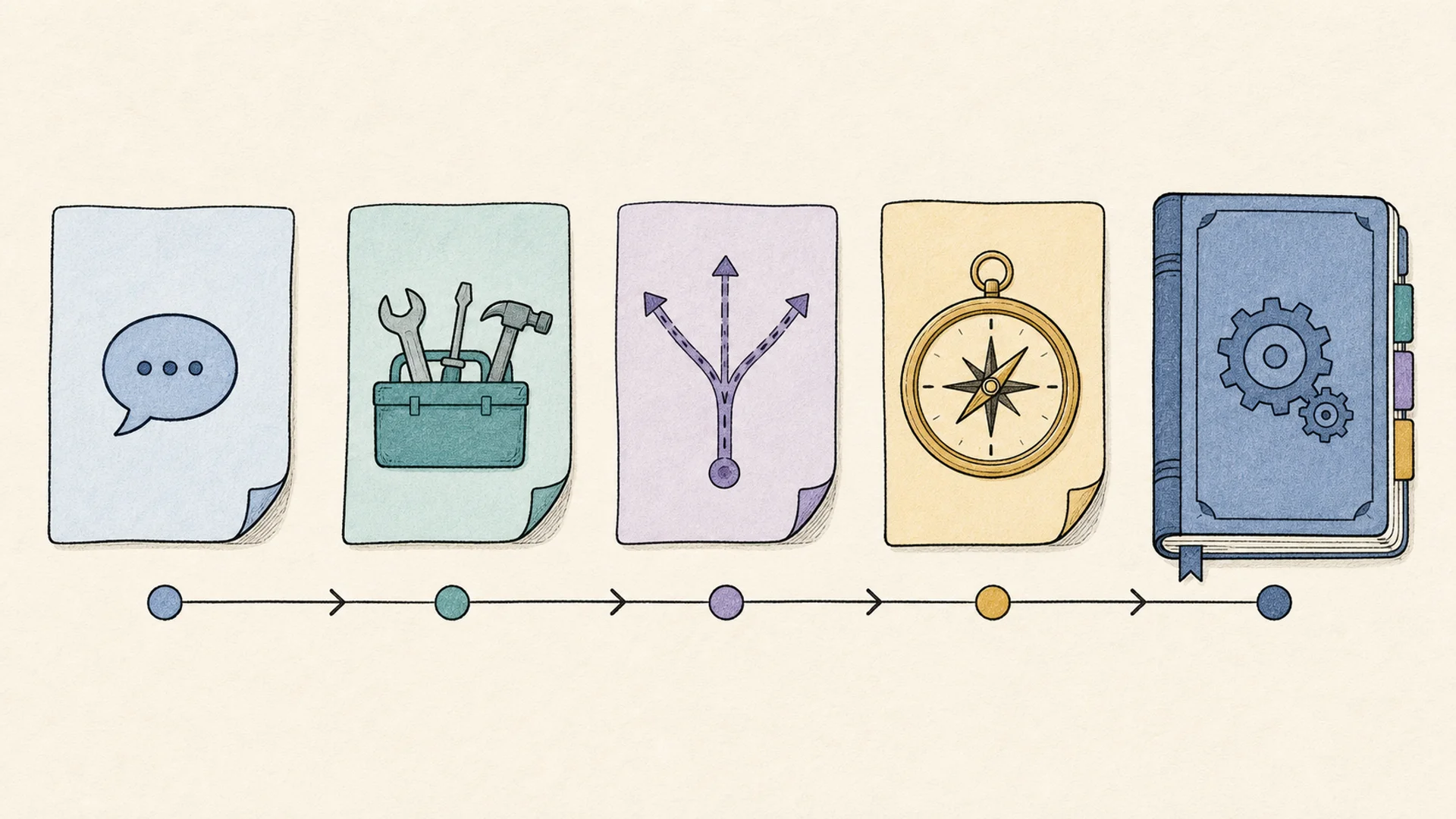 Hand-drawn timeline from chat assistant behavior to complete agent operating manual
Figure 2: The prompt evolution points from richer assistance toward structured operation: act, discover tools, preserve state, and produce artifacts.
Why the harness era is not just “better chat”
The important industry shift is not that models can write longer answers. It is that models are increasingly expected to participate in longer work loops. A real loop has state and risk.
Consider a coding task. The user does not need a paragraph claiming that the bug is fixed. They need a patch, test output, a changed-files summary, and a review note. Consider a market briefing. The user does not need a confident synthesis with no traceability. They need dated sources, citations, deltas from the previous report, and a place to update the briefing next week. Consider browser-based operations. The user does not need a promise that a report was downloaded. They need the file, the folder, an exception list, and a record of which steps were automated versus manually handled.
A single chat UI struggles with this because it lacks several things that work requires:
- External state: What has already been read, changed, downloaded, or decided?
- Stage checkpoints: Where should the work pause for approval or redirection?
- Permission boundaries: Which actions are read-only, reversible, external-facing, destructive, or expensive?
- Recovery: If the task fails halfway through, can it resume without restarting blindly?
- Artifact lifecycle: Where does the final result live after the chat scrolls away?
- Parallel isolation: Can research, writing, testing, and review happen in separate workstreams without polluting each other?
- Observability: Can a human inspect sources, actions, costs, failures, and assumptions?
These are not prompt-engineering details. They are operating-surface details.
How MCPlato carries the trend
MCPlato is best understood as an AI workspace and agent operating surface, not merely another answer box. Its product vocabulary maps naturally to the direction implied by Claude’s newer system prompts.
Sprite is the coordinator. When a task has multiple phases or specialists, a Sprite can break the work down, delegate to sessions, track progress, and bring the pieces back together. This matters because long tasks rarely fit one uninterrupted chain of thought.
Wand is a stateful packaged workflow. Instead of asking an AI to improvise the same process every time, a Wand can define phases, gates, scoped resources, and expected artifacts. The result is closer to a repeatable work app than a prompt template.
Artifact is the durable endpoint. The output should not be trapped in a wall of chat text. It should become a report, patch, deck, spreadsheet, folder, decision memo, QA record, or other inspectable object.
Skill and Distill Skill preserve know-how. When a workflow works, the reusable parts should become accessible again. This is how a team moves from isolated hero prompts to shared operating practice.
ClawMode and Scheduled Tasks extend work across time. Some valuable tasks are not immediate: a weekly research brief, a nightly repository scan, a recurring content pipeline, or a follow-up after new information appears.
Permission and approval gates keep autonomy bounded. MCPlato should not be framed as blind automation. The better principle is controlled autonomy: let the AI proceed where the action is low-risk, and require human approval when the action changes files, sends messages, touches external systems, or creates business risk.
Channels and IM bridges make interaction asynchronous. A user should be able to delegate a task from a team chat, receive progress updates, and review the final artifact without babysitting a foreground chat window.
Local-first workspace state keeps materials, state, and outputs close to the user’s work. That does not remove every privacy or security concern, but it changes the posture: the workspace is where context is organized, reviewed, and governed.
In short, MCPlato gives models the kind of environment their newer operating instructions increasingly assume: tools, files, memory, permissions, phases, artifacts, and human checkpoints.
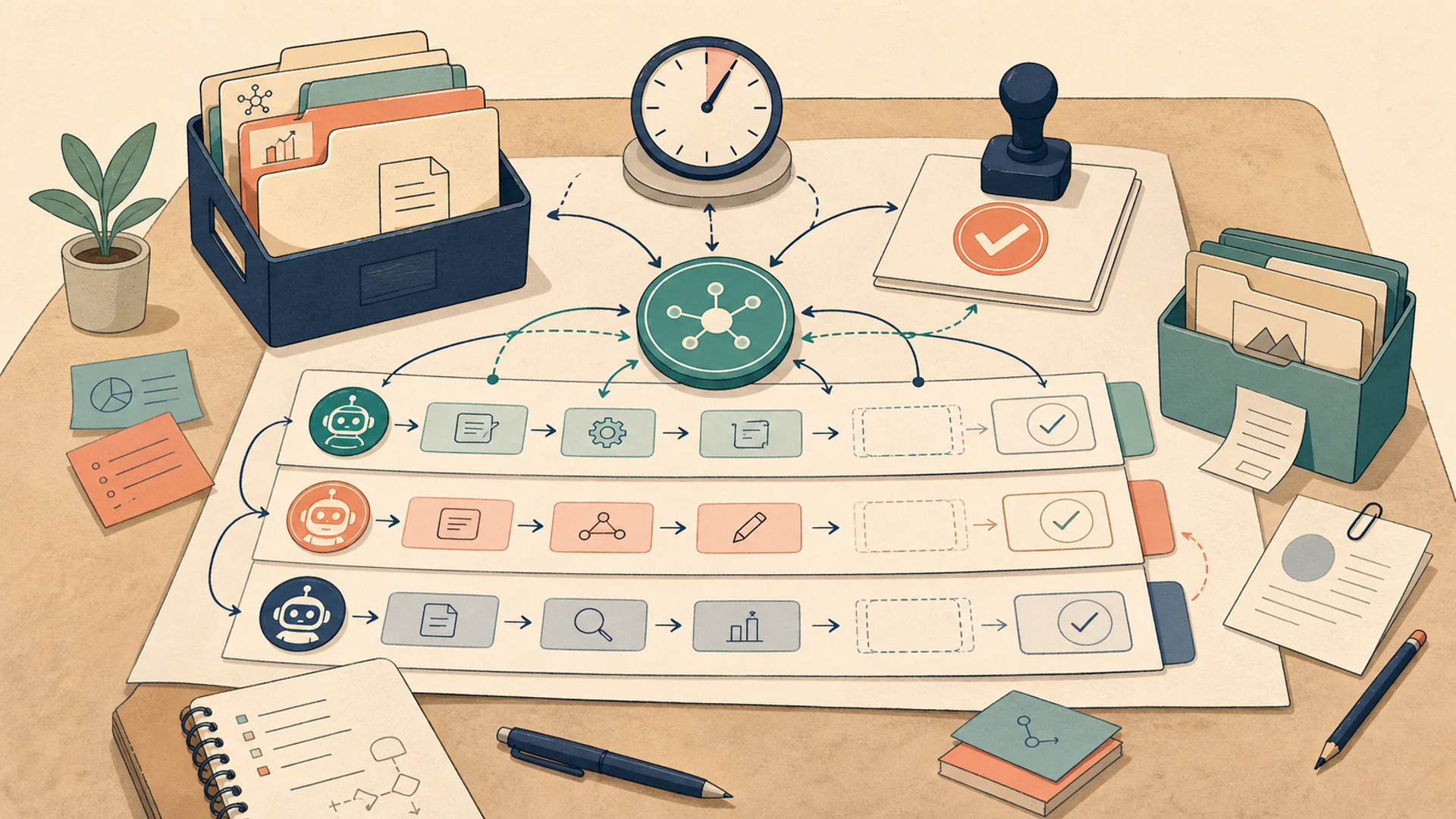 Flat editorial illustration of a workspace harness with artifacts, schedules, approvals, and session lanes
Figure 3: A harness turns model capability into observable, permissioned, artifact-centered work loops.
Four concrete examples
1. Coding issue to patch to QA artifact
A user drops a GitHub issue into MCPlato and asks for a fix. In a chat-only flow, the assistant may jump directly to suggestions. In a harness flow, the task becomes staged work:
- read the issue and repository context,
- draft a scope-limited plan,
- ask before editing if the change is risky,
- make the patch,
- run the agreed checks,
- produce a QA artifact with changed files, test output, unresolved risks, and review notes.
Claude’s acting-vs-clarifying behavior fits this well. The agent should not ask unnecessary questions before reading the issue, but it should pause before broad or destructive changes.
2. Scheduled research briefing with citations
A weekly research briefing is not a one-off answer. It is a recurring loop: gather approved sources, deduplicate, compare against last week, summarize changes, cite every concrete claim, and deliver the report. MCPlato’s Scheduled Tasks and Artifacts make the output persistent; channels make delivery asynchronous; Skills make the format reusable.
The prompt-level instruction to cite sources becomes more valuable when the workspace can preserve the source list and the briefing artifact together.
3. Browser and document workflow
Imagine a finance team that must download reports from a web portal, combine them with spreadsheets, and produce a monthly summary. A good agent should not claim universal access to every website. It should respect login boundaries, ask the user to handle MFA, discover whether an export or API exists, automate only the approved repeatable steps, validate file counts, and produce an exception report.
This is the difference between “AI can use a browser” and “AI can operate inside a controlled browser/document loop.”
4. Risky action approval
Suppose an agent drafts an email to customers, prepares a command that changes production data, or proposes deleting a folder. The model may understand the instruction, but understanding is not authority. A harness should convert that step into an approval checkpoint: show the intended action, expected effect, rollback plan, and evidence, then wait.
This is where safety and productivity reinforce each other. The user does not need to slow down every read-only step. The user does need a clear gate before an irreversible or external-facing action.
What this means for builders
For AI product builders, the Claude system prompt release notes are a useful design signal. Do not only ask, “Which model is smartest?” Ask:
- What environment does the model believe it is operating in?
- Can the product expose tools without blurring permissions?
- Can the workflow continue across time without losing state?
- Can the user inspect what happened?
- Can the final result live as an artifact, not a transcript?
- Can the system pause at the right moments instead of asking too often or acting too freely?
The answer will not come from a longer system prompt alone. A prompt can describe behavior, but the product must supply the surface that makes the behavior reliable.
That is the harness era: models become more capable, but capability becomes useful only when surrounded by state, tools, recovery, approvals, and artifacts.
Conclusion
Claude Fable 5’s system prompt snapshot is interesting because it points beyond model capability. It shows the shape of the environment modern models are being prepared to inhabit. The frontier is no longer just “better chat.” It is agent work: stateful, tool-aware, permissioned, citation-conscious, recoverable, and artifact-centered.
MCPlato is built for that direction. Sprite coordination, Wands, Artifacts, reusable Skills, scheduled work, channels, local-first workspace state, and approval gates are not decorations around a model. They are the operating surface that lets a strong model become a useful participant in real work.
The model is still the engine. The harness is what turns the engine into a vehicle people can steer, inspect, repair, and trust.
References
- Anthropic docs, System Prompts release notes.
- Anthropic docs, Introducing Claude Fable 5 and Claude Mythos 5.